Job Costing & Profitability for Contractors: Connecting Estimates to Field Reality
Legal Disclaimer: Pricing and feature comparisons are time-stamped as of May 2024 and subject to vendor changes; verify current details with each vendor.
For owners of contracting firms with 5 to 100 field workers, the difference between a profitable year and a break-even year often comes down to a single variable: how accurately you track labor in the field. If your crew of 40 is still tracking hours on paper, you're likely leaking labor cost into every job. While your bank balance might look healthy today, profitable jobs are often quietly subsidizing 'loser' jobs that remain invisible without job-level costing.
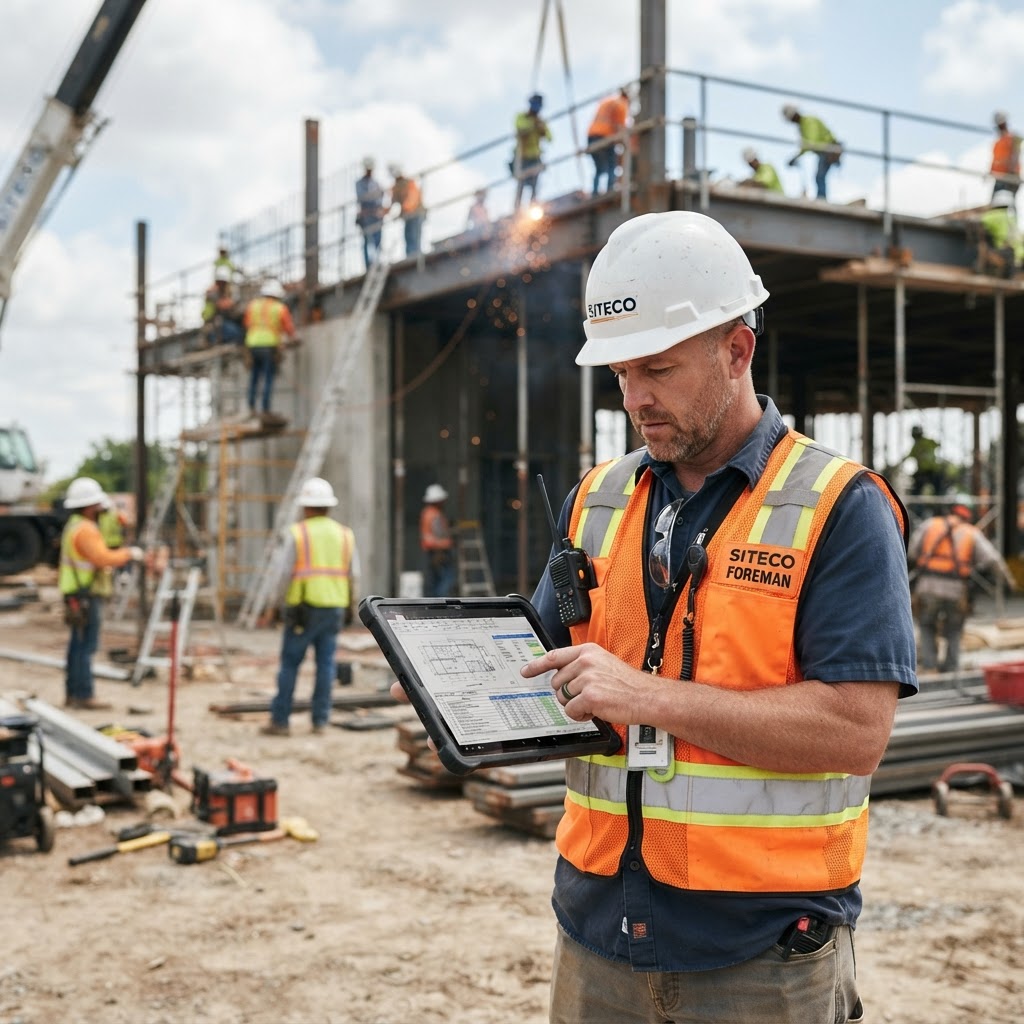
The goal of modern construction operations software is to help companies move from gut feeling to real-time data. This shift requires moving job costing out of the back office and into the daily workflow of the field.
The 30–50% Variable: Why Labor is Your Greatest Risk
In most contracting trades, labor typically accounts for 30% to 50% of total project costs. Unlike materials, which are largely fixed once the PO is signed, labor costs accumulate daily. Labor is highly dependent on field productivity, weather, and site readiness. Because it is the highest variable risk, it is also the area where margin fade is most common.
How do contractors track job profitability effectively? It starts by recognizing that 'money in the bank' is a lagging indicator. By the time a project hits your financial statements at the end of the month, any opportunity to correct productivity issues has already passed. Real-time tracking is the only way to catch margin fade before it eats the entire profit of the project.
The Hidden Cost: Understanding Labor Burden
A common mistake in manual job costing is using a worker's base hourly wage to calculate project costs. This leads to 'phantom margins' that disappear when the overhead hits. To get an accurate picture, you must use a fully burdened rate.
The labor burden includes taxes, insurance (including workers' comp), benefits, and PTO. In 2024-2025 benchmarks, the fully burdened rate is often 1.3x to 1.6x the worker's base hourly wage. For example, a technician earning $30 per hour may actually cost the company $45 to $48 per hour. If your job costing software for contractors isn't accounting for this burden automatically, your estimates will never align with reality.
Connecting Estimated Hours to Actual Labor
The right contractor operations platform connects estimated hours to actuals so job costing is real, not a month-end guess. This connection requires a standardized cost-code taxonomy. Many companies make the mistake of using generic categories like 'Labor' or 'Materials' in their accounting software. For operations leaders, this data is useless.
Instead, use 5-10 specific categories per trade. For a landscaping or civil contractor, this might include 'Site Prep,' 'Grading,' 'Hardscape Installation,' and 'Finishing.' By using a focused set of codes, field crews can easily log time against specific tasks without being overwhelmed by a 50-page code book. This allow you to see exactly where hours are being over-spent.
The 20% Rule: Catching Margin Fade Early
Most labor overruns are detectable within the first 20% of a project. If a crew is allotted 100 hours for site prep but has already used 30 hours with only 10% of the work completed, you have a productivity problem. In a paper-based system, you wouldn't know this until the job was over. With real-time construction operations software, you can see this variance on Tuesday morning and adjust the plan for Wednesday.
Moving from Accounting to Operations
Job costing is often viewed as an accounting task, but for companies with 5 to 100 workers, it must be a field-management tool. When the field supervisor sees the budget vs. actuals daily, they take ownership of the margin. This transparency prevents the 'disconnected systems' problem where field reality and financial reporting never align.
The 90-Day Profitability Audit
Profitability analysis must move beyond general P&L statements. We recommend that contractors perform 90-day audits to verify data integrity. The goal is to ensure that at least 80% of all labor and material costs are accurately coded to specific jobs rather than general overhead. If your 'unallocated labor' is higher than 20%, your job costing data is too thin to support accurate future bidding.
Accuracy in tracking prevents manual entry variance. Small errors in paper timesheets—like rounding or 'buddy punching'—compound when calculating burdened rates. These errors lead to inaccurate future bids, causing you to either lose money on low bids or lose work on inflated ones.
Protect Your Margins with SiteSlate
Connecting estimated hours to actual labor isn't about micromanaging; it's about giving your team the data they need to succeed. By moving to a digital system, you eliminate the gap between the field and the office.
If you are ready to stop guessing and start growing your net profit, it is time to see how SiteSlate handles the complexities of field operations and job costing.
Book a working demo today: https://getsiteslate.com